Guide to Cargo Security & Freight Security in Modern Supply Chains



Cargo theft continues to evolve as organized criminal groups increasingly rely on fraud, identity theft, and technology instead of traditional break-ins. For shippers, brokers, carriers, and logistics providers, freight security is no longer limited to locks and seals—it requires strong carrier vetting, operational discipline, visibility, cybersecurity, and documented response procedures. A layered security strategy helps reduce theft, protect customer relationships, minimize business interruption, and improve claim outcomes after a loss.
Cargo theft today takes several forms, from physical break-ins to fraud-based schemes, and recognizing each is the first step in any freight security program.
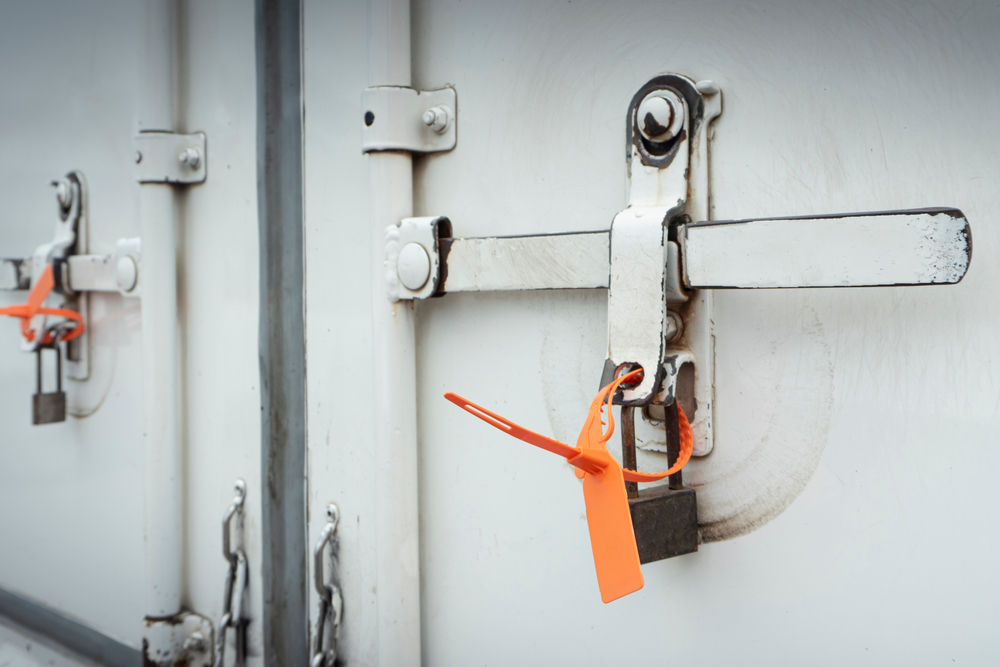
Physical cargo theft involves the unlawful removal of freight from trailers, warehouses, rail yards, distribution centers, or parked equipment. High-risk locations include unsecured drop lots, public truck parking, and facilities with limited access control. Criminals frequently target freight during nights, weekends, and holidays when trailers remain unattended.
Strategic cargo theft has become one of the fastest-growing threats in North American transportation. Rather than stealing a loaded trailer by force, criminals manipulate the freight booking process. They may impersonate legitimate carriers, create fictitious carrier identities, compromise email accounts, or use stolen FMCSA credentials to convince brokers and shippers to voluntarily release freight.
Because these shipments often appear legitimate at pickup, theft may not be discovered until a scheduled delivery is missed.
Pilferage involves stealing a portion of a shipment rather than the entire load. It commonly occurs during cross-docking, warehousing, or loading and unloading operations, making accurate piece counts and seal inspections important.
A handful of recurring conditions make freight far more vulnerable to theft.
No single tool prevents cargo theft; freight security works when several defensive layers operate together.
Evaluate commodity value, theft history, route risk, delivery windows, and customer requirements before tendering a shipment.
Verify FMCSA operating authority, insurance, safety history, contact information, and business legitimacy. Use carrier monitoring platforms and independently verify contact information before releasing shipment details.
Confirm driver identity, equipment information, pickup numbers or PINs, and verify any last-minute changes through trusted contacts rather than email alone.
Limit unnecessary storage and plan routes that minimize unattended stops. Use secure parking whenever possible for high-value freight.
GPS tracking, geofencing, telematics, electronic seals, and proactive check calls improve visibility and shorten response times when anomalies occur.
Establish procedures for notifying customers, carriers, insurers, cargo recovery partners, and law enforcement while preserving shipping records and electronic evidence.
Many modern cargo theft schemes begin with cybercrime. Criminals exploit phishing emails, compromised load board accounts, spoofed domains, and business email compromise to redirect freight or payments. Multifactor authentication, employee awareness training, and verification of sensitive requests through independent communication channels significantly reduce exposure.
Carrier liability should not be confused with cargo insurance. Under the Carmack Amendment, interstate motor carriers are generally liable for cargo loss or damage unless a recognized defense or valid limitation of liability applies. However, liability may not equal the full value of a shipment. Shipper’s interest cargo insurance can provide broader financial protection, particularly for high-value freight or situations where carrier liability is disputed or limited.
Use this checklist to put the core freight security practices into daily operation.
Effective freight security is built on multiple layers rather than a single technology or process. Strong carrier vetting, operational discipline, cybersecurity, shipment visibility, employee training, and well-defined response procedures work together to reduce theft risk. Organizations that invest in prevention are typically better positioned to protect customers, reduce financial losses, and resolve cargo claims efficiently.
Quick answers to the questions shippers and brokers ask most often about cargo theft and freight security.
What is strategic cargo theft?
A fraud-based scheme where criminals impersonate legitimate transportation providers or otherwise manipulate the freight booking process to obtain cargo.
How can brokers reduce cargo theft?
Implement rigorous carrier onboarding, verify identities independently, use pickup authentication procedures, monitor shipments, and educate employees about fraud trends.
Is carrier liability the same as cargo insurance?
No. Carrier liability is a legal obligation that may be limited by law or contract, while cargo insurance is an insurance product that can provide broader protection.
What should happen immediately after a theft?
Notify law enforcement, the carrier, the customer, and insurers promptly while preserving bills of lading, tracking records, communications, photographs, and other evidence.
Freight security is ultimately an operational discipline, not a product you can buy once. As an analytics-driven 4PL partner that advocates for the shipper with zero conflict of interest, Sheer Logistics builds visibility, carrier vetting, and response procedures into how your freight moves—supported by TMS software that keeps shipment data and exceptions in one place. Connect with the Sheer team to strengthen your freight security program.
TT Club, & BSI. (2025). TT Club–BSI 2025 cargo theft report. BSI Group. https://page.bsigroup.com/l/73472/2026-04-17/2ckmv1f/73472/1776452766rbJNcQIG/TT_Club_BSI_2025_Cargo_Theft_Report.pdf
Truckopedia. (n.d.). DOT number vs. MC number. Truckopedia. https://www.truckopedia.com/blog/dot-number-vs-mc-number/
Federal Motor Carrier Safety Administration. (n.d.). Safety and fitness electronic records (SAFER) system. U.S. Department of Transportation. https://safer.fmcsa.dot.gov/
Sheer Logistics. (n.d.). Transportation management system. Sheer Logistics. https://sheerlogistics.com/transportation-management-system/
St Louis HQ
635 Trade Center Blvd.
Chesterfield, MO 63005
Chicago Office
505 N La Salle Dr. Suite 300
Chicago, IL 60654
Laredo Office
8206 Killam Industrial Blvd.
Laredo, TX 78045
Atlanta Office
10745 Westside Way #265
Alpharetta, GA 30009

 Cargo Insurance, Theft, and Liability: What Shippers Need to Know
This site uses cookies. By continuing to browse the site, you are agreeing to our use of cookies.
OKLearn moreWe may request cookies to be set on your device. We use cookies to let us know when you visit our websites, how you interact with us, to enrich your user experience, and to customize your relationship with our website.
Click on the different category headings to find out more. You can also change some of your preferences. Note that blocking some types of cookies may impact your experience on our websites and the services we are able to offer.
These cookies are strictly necessary to provide you with services available through our website and to use some of its features.
Because these cookies are strictly necessary to deliver the website, refusing them will have impact how our site functions. You always can block or delete cookies by changing your browser settings and force blocking all cookies on this website. But this will always prompt you to accept/refuse cookies when revisiting our site.
We fully respect if you want to refuse cookies but to avoid asking you again and again kindly allow us to store a cookie for that. You are free to opt out any time or opt in for other cookies to get a better experience. If you refuse cookies we will remove all set cookies in our domain.
We provide you with a list of stored cookies on your computer in our domain so you can check what we stored. Due to security reasons we are not able to show or modify cookies from other domains. You can check these in your browser security settings.
We also use different external services like Google Webfonts, Google Maps, and external Video providers. Since these providers may collect personal data like your IP address we allow you to block them here. Please be aware that this might heavily reduce the functionality and appearance of our site. Changes will take effect once you reload the page.
Google Webfont Settings:
Google Map Settings:
Google reCaptcha Settings:
Vimeo and Youtube video embeds: