Data-Driven Transportation Analytics for Freight Shipping
Transportation logistics analytics and freight data analytics that power better decisions across your transportation network.

Transportation logistics analytics and freight data analytics that power better decisions across your transportation network.
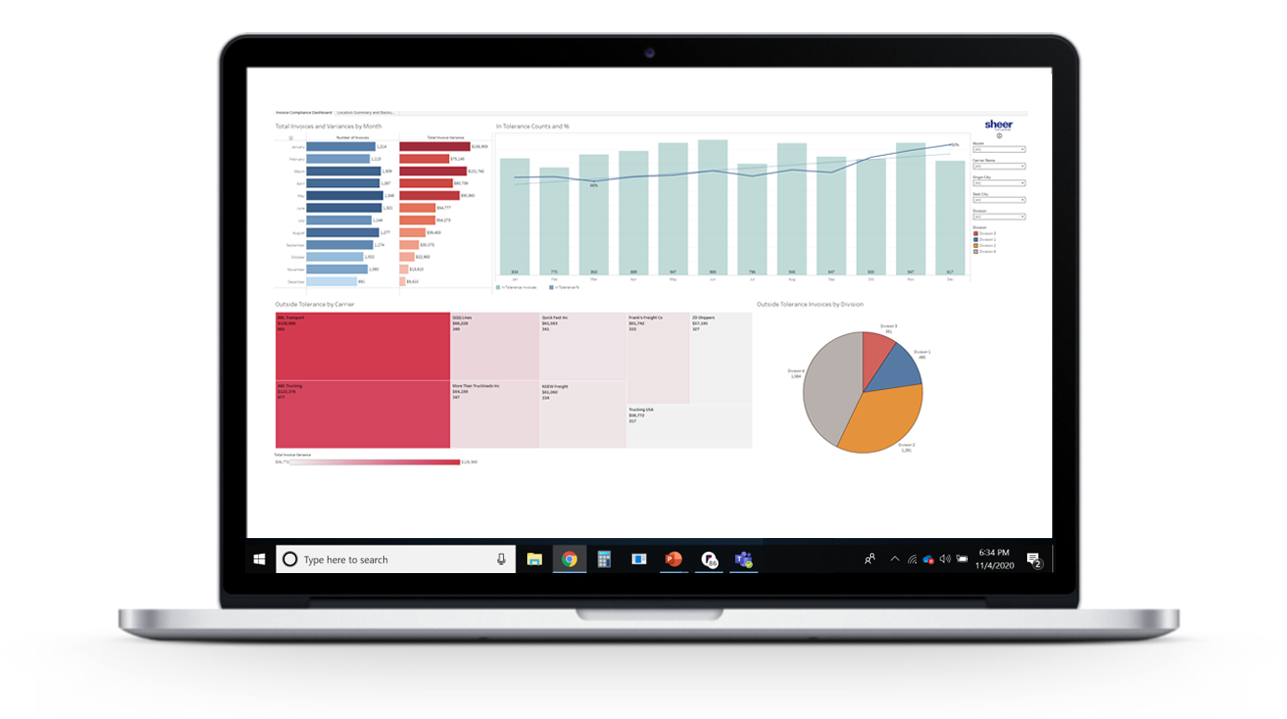
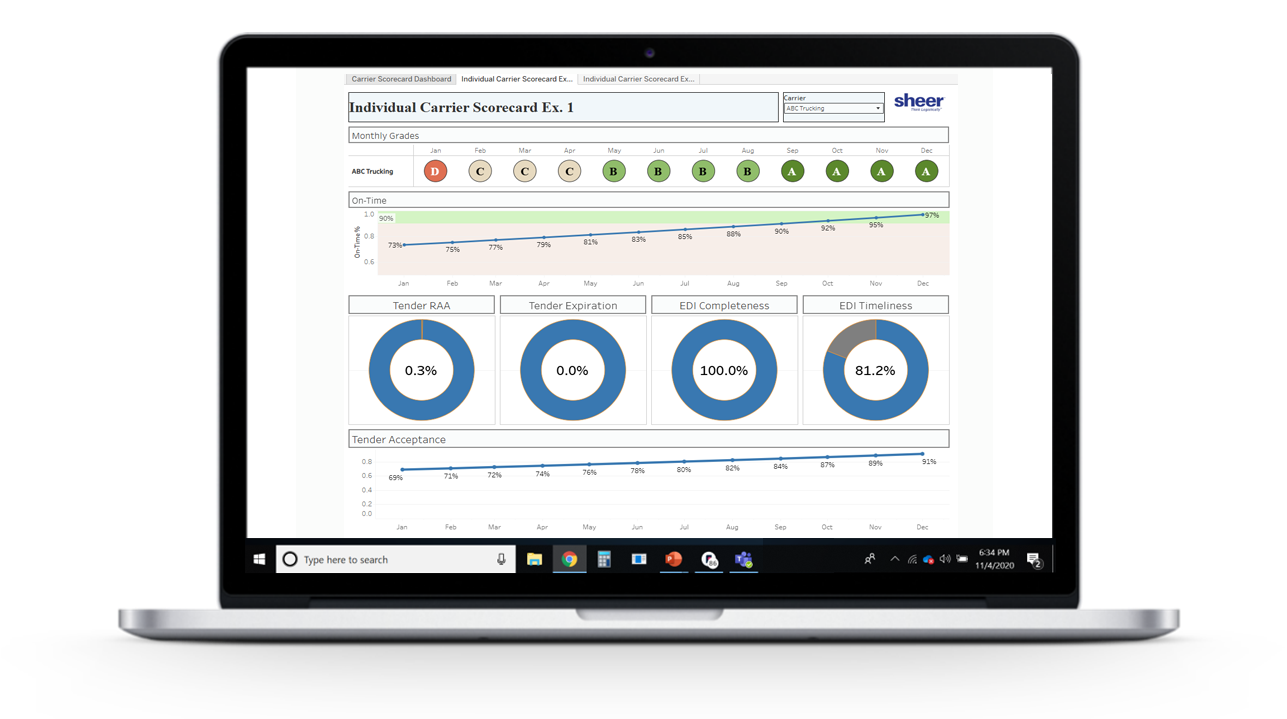
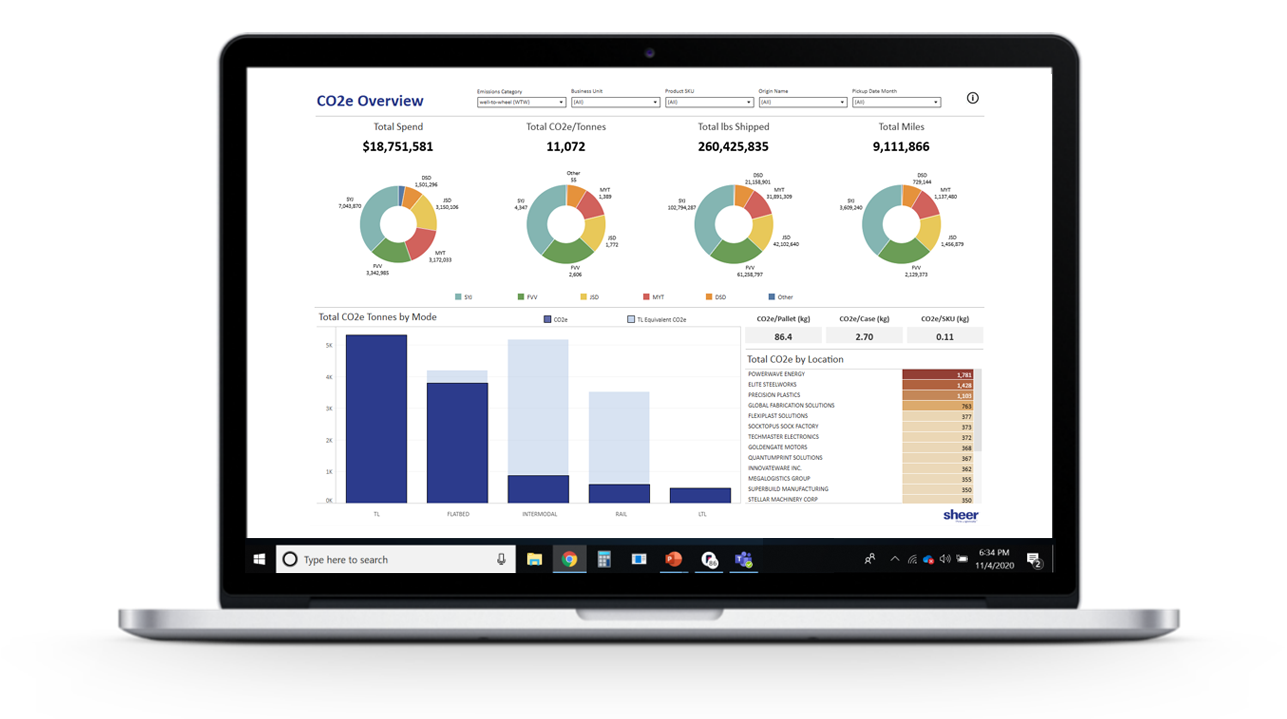
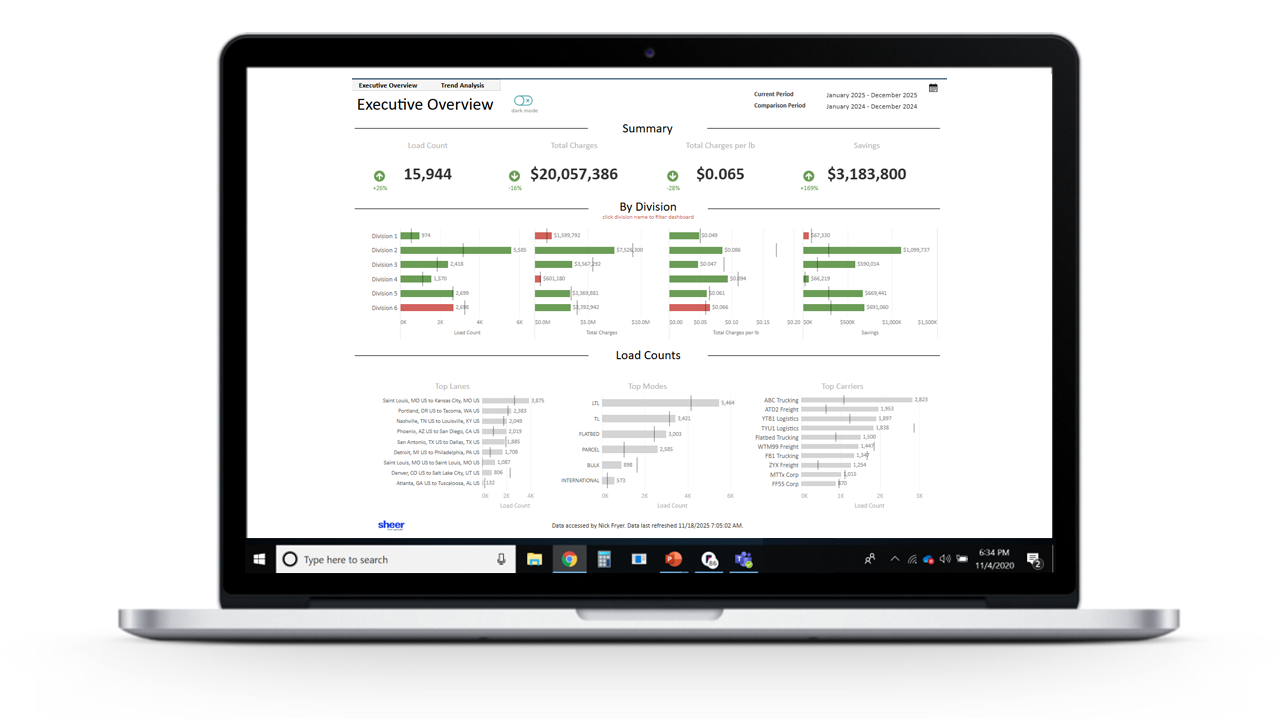
Dashboards, carrier scorecards, and benchmarking built from your TMS and ERP data—so you can reduce costs, improve OTIF, and quickly identify billing exceptions.





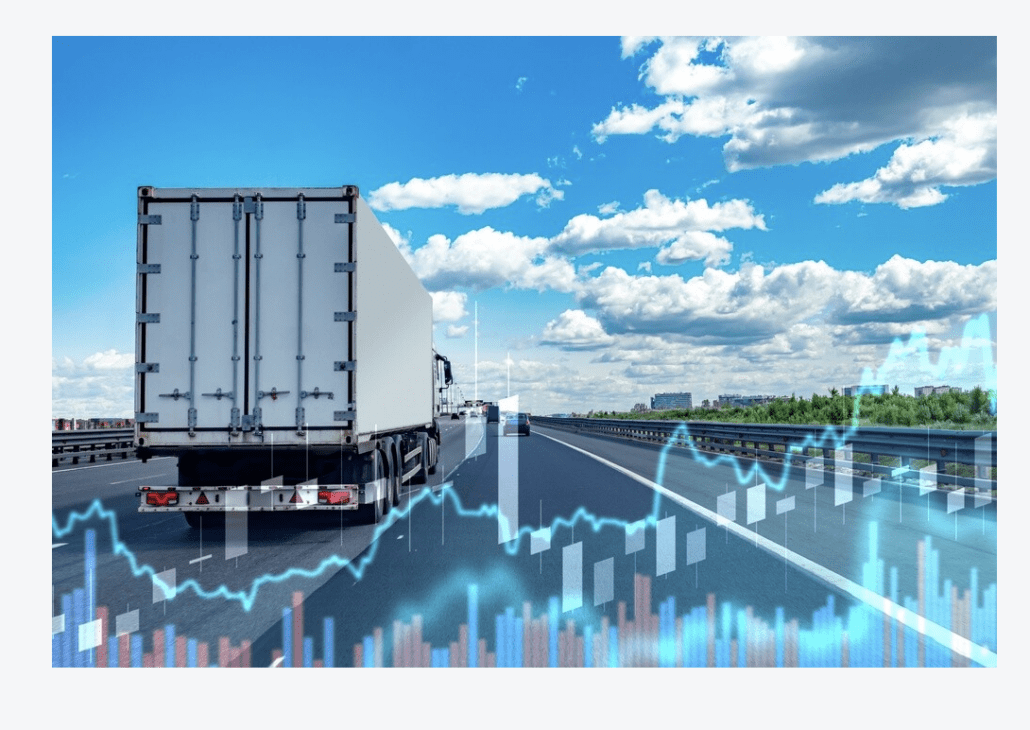
Shipping and logistics can be simpler with the right technology and expertise. Sheer Logistics unlocks the insights hidden in your transportation data, delivering Tableau-ready dashboards and self-serve reporting—integrated into your daily shipping workflows—so your team can make faster, smarter decisions.
FINANCE
OPERATIONS
PROCUREMENT
Sheer Logistics transforms transportation data from your TMS, ERP, WMS, carrier EDI feeds, and financial systems into clear, actionable insights. Using Sheer TMS, SheerExchange integrations, and modern BI tools such as Tableau or your preferred analytics platform, we automatically consolidate and normalize shipment, cost, service, and carrier performance data.
Our analytics environment refreshes in near real time depending on data source so your team always works from the most current information available.
Your team gains access to a suite of ready-to-use analytics including:
All reporting is delivered through governed, Tableau-ready dashboards and self-serve analytics, allowing supply chain, finance, and operations teams to explore data without relying on manual spreadsheet analysis.

The Result: clear visibility, faster decision-making, and continuous transportation performance improvement.
DATA SOURCES & INTEGRATION
SECURITY & COMPLIANCE
Logistics never stops—and neither should your visibility. Spreadsheets and manual reporting can’t keep up with today’s transportation networks.
Sheer Logistics delivers clear, actionable insights from your transportation data so you can understand performance, identify cost drivers, and improve service across your network. With intuitive dashboards and easy-to-use reporting built from your shipment, carrier, and cost data, your team can quickly evaluate how products move, where inefficiencies exist, and where optimization opportunities lie.
Make faster, more confident decisions with transportation analytics designed for real operations.
Powered by Advanced Logistics Technology
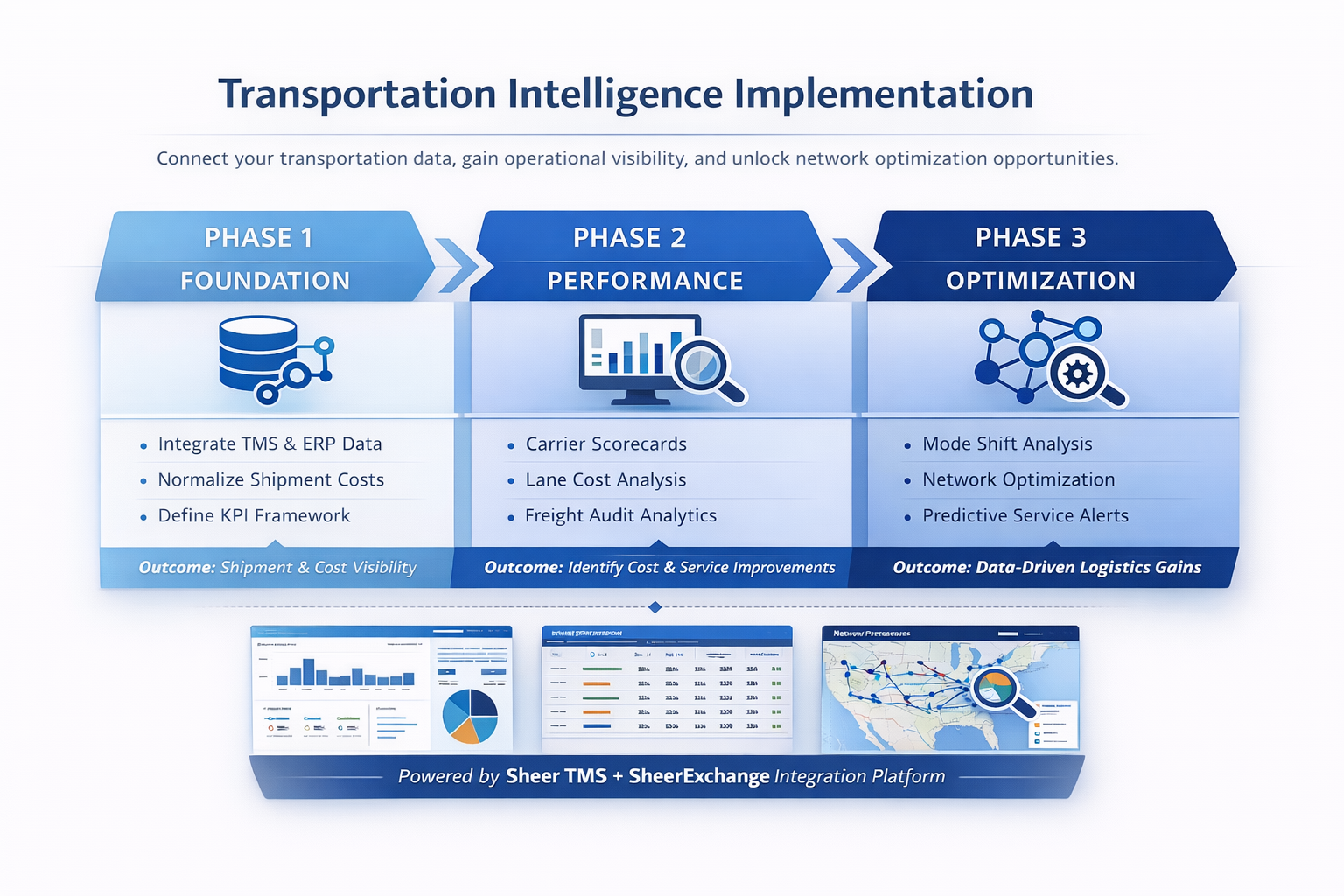
Sheer’s technology platform provides real-time visibility into transportation activity across your network. By integrating data from your TMS, ERP, carrier systems, and financial platforms, we deliver analytics that support smarter planning, stronger carrier management, and continuous network optimization.
With automated data integration, governed dashboards, and self-service reporting, your team gains the insights needed to reduce cost, improve service performance, and drive supply chain efficiency.

What is transportation logistics analytics?
Transportation logistics analytics is the process of collecting and analyzing freight data—such as shipment costs, carrier performance, transit times, and service levels—to uncover insights that improve transportation efficiency and reduce costs. Advanced analytics tools combine data from systems like TMS, ERP, and carrier feeds to produce dashboards, benchmarks, and predictive insights that guide logistics decisions.
What data is needed to start transportation analytics?
Most analytics initiatives begin with transportation data from systems such as:
Combining these data sources provides a comprehensive view of cost, service levels, routing performance, and carrier reliability.
How fast can we see insights?
Initial dashboards and baseline insights can often be delivered within weeks once data connections are established. Early insights typically include freight spend analysis, carrier performance scorecards, and on-time delivery metrics. Over time, analytics programs evolve into more advanced capabilities such as predictive alerts, benchmarking, and continuous network optimization.
Do you integrate with our TMS or ERP systems?
Yes. Transportation analytics platforms are designed to integrate with most modern systems through APIs, EDI connections, flat file uploads, or integration platforms. Typical integrations include TMS, ERP, WMS, and carrier systems to create a unified dataset for reporting and analysis.
Can you support Tableau, Power BI, or other BI tools?
Yes. Many organizations prefer to view logistics analytics inside their existing business intelligence environment. Transportation analytics solutions commonly support tools such as Tableau, Microsoft Power BI, or other BI platforms through governed data models and standardized datasets.
What insights can transportation analytics provide?
Transportation analytics can reveal:
These insights help logistics teams identify cost savings and service improvements across their network.
What transportation KPIs should we track?
Common transportation analytics KPIs include:
Tracking these metrics over time helps identify trends and operational improvement opportunities.
Can transportation analytics identify cost savings opportunities?
Yes. Analytics tools can identify opportunities such as:
These insights help organizations continuously reduce transportation costs while improving service.
How often does transportation analytics data refresh?
Most analytics solutions refresh data daily or near real-time depending on system integrations. Real-time dashboards allow teams to monitor shipments, track exceptions, and respond quickly to disruptions.
Can analytics help with freight audit and invoice accuracy?
Yes. Transportation analytics can flag billing exceptions by comparing carrier invoices against contracted rates and shipment details, helping companies identify overcharges and prevent recurring billing errors.
Is transportation analytics useful even if we already have a TMS?
Yes. While most TMS platforms include basic reporting, advanced analytics layers often provide deeper insights, cross-system data integration, benchmarking, and executive-level dashboards that go beyond standard TMS reports.
Do we need a large logistics team to use transportation analytics?
No. Modern analytics platforms automate data aggregation, reporting, and alerting, making it possible for smaller logistics teams to monitor performance and identify opportunities without extensive manual analysis.