What is LTL Consolidation and Who Should Use it?



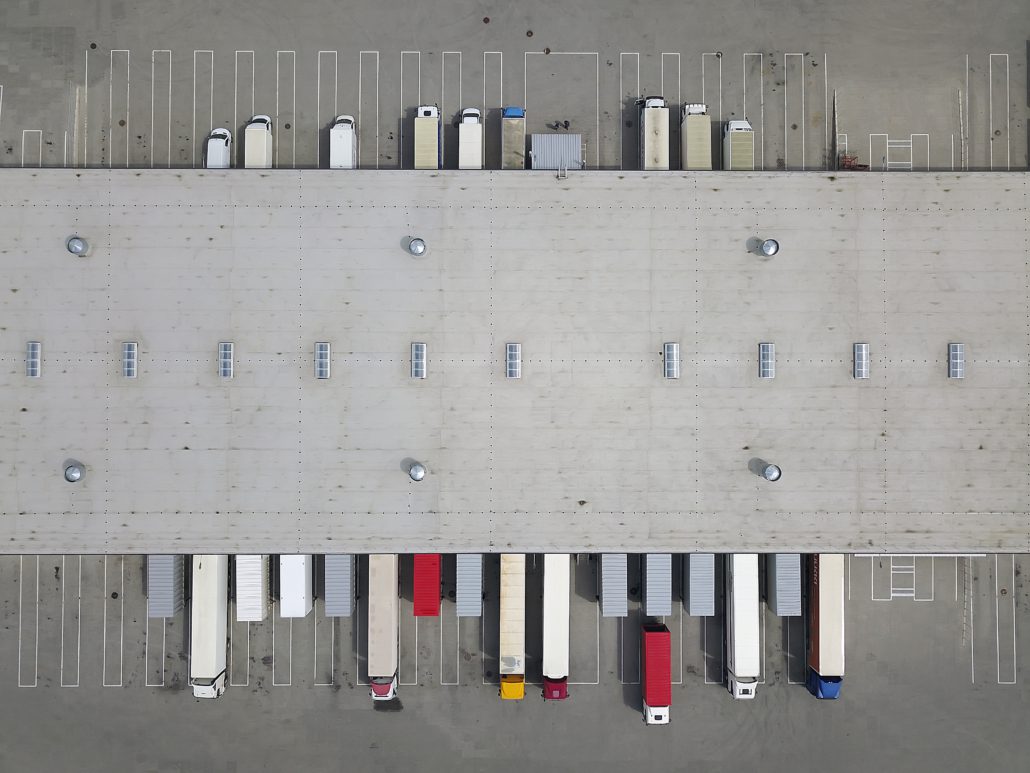

Less Than Truckload (LTL) consolidation combines multiple smaller shipments into fewer, larger shipments. Instead of sending each pallet out separately, you group compatible freight so it travels together, using more of the truck’s space and paying less per pallet or pound.
For example, let’s say you’re a manufacturer shipping products from Ohio to five retailers across the Southeast: one pallet to Georgia, two to North Carolina, one to South Carolina, and one to Tennessee.
With consolidation, you hold those shipments for 1-2 days, then move them as one consolidated load heading Southeast. Instead of five shipping charges, you pay one full truckload rate.
According to a recent study, effective freight consolidation strategies can move the same cargo with only about 67% of the trucks currently used.
The strategy focuses on two core optimization principles:
There are two main ways to apply consolidation:
LTL Shipments are collected, grouped by destination, timing, and handling requirements, built into optimized loads at a hub, moved long-haul, and then distributed for final delivery.
Your shipments are collected from your plants, warehouses, or manufacturing partners. You can even combine freight with other shippers heading in the same direction.
Consolidation doesn’t just combine whatever’s ready. It groups freight based on:
Your freight arrives at a consolidation facility where staff build loads to maximize truck space while minimizing handling.
Once the truck is full, it heads to your destination region.
At the destination, your freight is either delivered by LTL carriers for the last mile or broken down at a regional hub and delivered to multiple locations based on your needs
Unlike traditional LTL, consolidation requires upfront planning, while full truckload works best for consistently full trailers and parcel shipping remains suited to small, lightweight freight.
Here’s a quick walkthrough of the difference between traditional LTL, LTL, and FTL:
By reducing empty space and unnecessary handling, consolidation lowers per-unit costs, cuts surprise fees, improves on-time delivery, reduces damage, and simplifies dock operations.
Lower cost per shipment
When you combine smaller shipments into fuller loads, you spread the cost of the truck across more freight, so your cost per pound or pallet usually drops compared to traditional LTL.
Fewer surprise charges
Because consolidation uses simpler, truckload-style pricing and fewer touches, you see fewer add-on fees, such as reweighs, reclasses, and accessorials.
Better on-time performance
Shipping on predictable patterns gives carriers a clear plan to work from, which often leads to more reliable pickups and fewer late deliveries.
Less damage to freight
With fewer terminals and handoffs, there are fewer opportunities for pallets to be crushed, shifted, or misrouted.
Better visibility and decisions
Treating consolidation as an ongoing setup, not one-off moves, gives you clean data on lane costs and carrier performance so you can make changes with confidence.
Less congestion and admin at docks
Fewer scheduled moves replace a bunch of small LTL pickups, which means fewer trucks at your doors and simpler scheduling and reception for your team and your customers.
Consolidation depends on consistent shipping schedules, disciplined execution, suitable lanes, and reliable carriers, and poor alignment in any of these areas can introduce delays.
Consolidation requires you to batch orders on a set schedule, such as shipping every Tuesday and Thursday, rather than moving each order individually as soon as it is ready.
If loads are put together incorrectly or communication breaks down between your team, the consolidation hub, and the carrier, consolidation can result in unintended delays.
Lanes with low or irregular volume, very short hauls, or urgent or special-handling freight often do not benefit from consolidation and are better handled another way.
If carriers miss pickup windows or don’t provide real-time tracking, your consolidation program will struggle no matter how well you designed it.
At Sheer Logistics, we believe consolidation works best for shippers who are ready to move beyond “What is the lowest rate today?” and think about how their whole network runs.
Consolidation works best for standardized, palletized freight moving in consistent volumes to regional customer clusters with some flexibility in pickup or delivery timing.
You ship consistent volumes regularly
Consolidation works best when freight moves in repeatable patterns, like similar volumes going to the same regions every day or every week.
You have customer clusters in similar regions
This is ideal for retail chains and dealer networks, or regional DCs with customers in the same city or metro area.
Your freight is standardized
If you are shipping standardized, palletized freight, consolidation is easy and affordable. But for odd shapes, fragile items, or unusual dimensions, shipping can be complex and expensive.
You have some timing flexibility
Most consolidation setups need a bit of wiggle room, like a 1–2 day pickup or delivery window. In practice, a well-designed program often still matches or beats traditional LTL transit times.
Your freight can ride with other shippers
Multi-shipper consolidation works when several companies move moderate volumes on the same lanes, so everyone shares fuller trucks, lowering their per-unit cost.
As a freight logistics consulting partner, we believe that the first step is to review your shipping data and select the freight that best meets these criteria, rather than trying to force every shipment into consolidation.
Shippers moving frequent LTL, serving regional markets, outgrowing parcel, or facing cost pressure without sacrificing service are strong candidates for LTL consolidation.
Less Than Truckload consolidation is ideal for you if:
You manufacture or distribute into regional markets
Ship from a plant or warehouse to multiple DCs, stores, or dealers in the same region, and you can often consolidate by destination.
You are an e-commerce brand that has outgrown parcel
Moved from mostly individual boxes to regular pallet shipments.
You need to cut freight costs without hurting service
Leadership is pushing to reduce freight spend, yet your customers still expect you to hit every delivery.
Your retail customers have tight delivery rules
Retail partners expect on-time, complete deliveries and penalize you with chargebacks for failures; consolidation gives you the structure and consistency to meet those requirements.
If the bullets above describe your shipping patterns, we strongly believe we can develop an LTL consolidation program that is right for your needs.
Specialized programs within LTL include multi-client shared lanes, dedicated routes, cross-dock and pool distribution models, and industry-specific solutions supported by advanced visibility and reporting.
Here are some of the major specialized LTL consolidation services:
At Sheer Logistics, we design consolidation programs around how you actually operate, making it easier to adopt and more likely to support your long-term freight strategy.
Successful programs start with shipment data analysis, identifying high-impact lanes, aligning carriers to service metrics, piloting selectively, and continuously refining performance. Here we explore those elements in detail.
Start by analyzing your historical shipment data and lane density to understand where consolidation can actually work.
Once you have that baseline, identify consolidation opportunities by geography, volume, and timing to focus your effort where the payoff is biggest.
Work with carrier partners to align on clear service expectations and performance metrics so everyone understands what success looks like.
Test the model on a few targeted lanes before rolling it out everywhere, so you can fix timing, capacity, and visibility issues without risking your entire network.
At Sheer Logistics, we believe implementation succeeds when technology, carrier relationships, and operational execution are managed under a single strategy owner who keeps the pieces aligned and moving in the same direction.
Consolidation isn’t universally beneficial, but it is highly effective when engineered correctly. It requires the right mix of data, execution discipline, and partner alignment to work, and the real long-term value comes from continuous optimization rather than one-time savings.
When managed as part of a broader transportation strategy, LTL consolidation becomes a competitive advantage rather than just a cost-cutting tactic. That shift in mindset is often what separates shippers who see real results from those who chase short-term rate reductions and move on.
Tran-SET. (n.d). Study the Impacts of Freight Consolidation and Truck Sharing on Freight Mobility by Lead University: Oklahoma State University
https://rosap.ntl.bts.gov/view/dot/42413/dot_42413_DS1.pdf
Sheer Logistics. (n.d.). What is Full Truckload (FTL) Shipping? Sheer Logistics.
https://sheerlogistics.com/blog/what-is-full-truckload-shipping/
Sheer Logistics. (n.d.). LTL vs. FTL: Which Is Right For Your Business? Sheer Logistics.
https://sheerlogistics.com/blog/ltl-vs-ftl-freight-shipping/
Sheer Logistics. (n.d.). Freight Logistics Consulting & Execution for Business Sheer Logistics.




 Measure and Boost Supply Chain Performance